
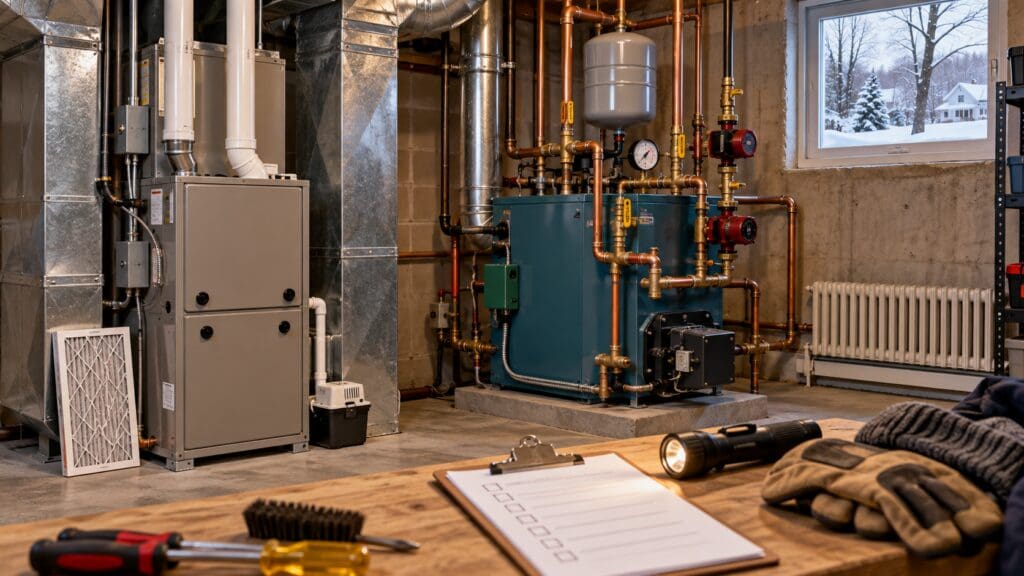
Furnace and Boiler Winter-Readiness Checklist for Capital Region Homes
Fall can disappear quickly in the Capital Region.
One week you’re opening the windows in the afternoon. A few weeks later, the furnace or boiler may be running every night.
That makes early fall the right time to give your heating system some attention—not after the first truly cold night when thousands of other homeowners are doing the same thing.
Whether your Albany-area home has a forced-air furnace, a hot-water boiler or an older radiator system, a little preparation now can help uncover developing problems, improve reliability and give you time to make repairs before winter puts the system under its heaviest load.
ENERGY STAR recommends professional heating-system maintenance in the fall, before contractors get especially busy once winter arrives. ENERGY STAR
Here is a practical winter-readiness checklist for Capital Region homeowners.
1. Turn the Heat On Before You Really Need It
Don’t make the first 20-degree night the first time you test your heating system.
Turn the thermostat to heating mode on a cool fall morning and raise the temperature a few degrees.
Then pay attention.
Your system should start normally and begin warming the home without unusual smells, sounds or repeated starting and stopping.
For a furnace, check that warm air is reaching the rooms throughout the house.
For a boiler, make sure radiators or baseboards begin heating as expected.
A brief dusty smell when a system first runs after sitting idle may occur, but persistent burning, electrical, gas or fuel odors deserve professional attention.
Early testing gives you one big advantage: time.
If something isn’t working correctly, you can address it before your heating system becomes essential.
2. Check or Replace the Furnace Filter
If you have a forced-air furnace, this is one of the easiest and most important things you can do yourself.
A dirty filter restricts airflow. That makes the blower work harder and can affect comfort, efficiency and equipment performance.
ENERGY STAR recommends inspecting filters regularly and cleaning or replacing them when dirty, particularly during periods of heavy system use. ENERGY STAR
Before heating season:
- Check the existing filter
- Replace it if it is visibly dirty
- Confirm that the replacement is installed in the correct airflow direction
- Make sure you’re using the appropriate filter size and type for your system
During winter, continue checking it regularly.
Homes with pets, remodeling dust or heavier indoor-air-quality needs may need more frequent filter changes.
Boiler owners: this one may not apply
Most hydronic boiler systems don’t distribute heat through forced-air ductwork, so they don’t necessarily have the same whole-home return-air filter found on a furnace.
That’s one reason a furnace and boiler shouldn’t be treated as if they require exactly the same maintenance.
3. Test the Thermostat
Your heating equipment can be perfectly functional and still leave you uncomfortable if the thermostat isn’t operating correctly.
Before winter:
- Switch the thermostat into heating mode
- Verify that the displayed room temperature appears reasonable
- Raise the set temperature and confirm the heating system responds
- Review programmed schedules
- Replace thermostat batteries if your model uses them
- Make sure furniture, lamps or direct sunlight aren’t influencing the thermostat
Appolo’s seasonal tune-up process includes checking thermostat calibration because an inaccurate thermostat can affect both comfort and system operation. Appolo Heating
If you’re routinely changing the temperature dramatically throughout the day because parts of your home remain uncomfortable, that may point to a larger airflow, zoning or heating-system issue.
4. Make Sure Vents and Radiators Can Actually Heat the Room
Sometimes the heating system isn’t the problem.
The couch is.
Before winter, walk through the house and look at how heat is being distributed.
For furnace systems, make sure supply registers and return-air grilles aren’t blocked by:
- Furniture
- Rugs
- Curtains
- Storage boxes
- Holiday decorations
For boiler systems, make sure baseboards and radiators aren’t buried behind furniture or covered by objects that restrict normal heat transfer.
Closing too many registers in a forced-air system isn’t a good strategy for controlling room temperature, either. It can interfere with the airflow the HVAC system was designed to move.
If one section of the house consistently stays colder than the rest despite clear vents or radiators, mention that during your tune-up. It can be an important diagnostic clue.
5. Pay Attention to What Your Furnace Is Telling You
A furnace often gives you warning signs before it completely stops heating.
Keep an eye—or ear—out for:
- Banging or rattling
- Squealing
- Frequent cycling on and off
- Weak airflow
- Rooms that don’t heat evenly
- Difficulty reaching the thermostat setting
- Ignition problems
- Unexplained increases in heating costs
- Persistent unusual odors
Appolo’s furnace service includes diagnostics for issues such as short cycling, ignition problems and unusual noises, along with annual maintenance and heat-exchanger inspection. Appolo Heating
One symptom doesn’t automatically mean you need a new furnace.
It does mean it’s better to have the system evaluated now than during the middle of a January cold spell.
6. Give Your Boiler a Separate Pre-Winter Check
Boilers have their own set of components and warning signs.
Many homes throughout Albany, Schenectady, Troy and the surrounding Capital Region still rely on hot-water boilers, baseboard heat or traditional radiators, making boiler-specific maintenance especially relevant locally. Regional HVAC companies consistently recommend annual service before heating season for these systems. Empire State Plumbing
Homeowners can visually check for:
- Water around the boiler or nearby piping
- Signs of corrosion
- Dripping valves
- Radiators or baseboards that aren’t heating evenly
- Unusual banging, knocking or gurgling
- A pressure gauge behaving differently than normal
- Repeated need to add water to the system
Do not start adjusting fuel controls, safety devices or boiler operating pressure unless you’re qualified to do so.
Persistent pressure loss, leaks or unusual operation should be professionally diagnosed. Appolo specifically recommends annual boiler service before heating season, including cleaning, combustion tuning and safety checks such as the low-water cutoff. Appolo Heating
7. Test Your Smoke and Carbon-Monoxide Alarms
Heating-system readiness isn’t just about comfort.
It’s also about safety.
The City of Schenectady specifically recommends having furnaces professionally inspected before heating season, paying attention to chimney and ventilation connections, and testing carbon-monoxide and smoke detectors. City of Schenectady
Before winter:
- Test every smoke alarm
- Test every carbon-monoxide alarm
- Replace batteries when required
- Replace expired alarms according to the manufacturer’s instructions
- Make sure alarms haven’t been removed, covered or disabled
Fuel-burning furnaces and boilers depend on proper combustion and venting.
During Appolo’s heating tune-ups, technicians perform combustion-related checks along with carbon-monoxide screening and heat-exchanger inspection. Appolo Heating
If a carbon-monoxide alarm activates or you suspect a gas or CO emergency, leave the home and contact the appropriate emergency or utility provider from a safe location.
8. Take a Look at Venting and Chimney Areas
Homeowners don’t need to disassemble anything, but you can visually inspect accessible areas around the heating equipment.
Look for:
- Disconnected or damaged vent pipes
- Visible corrosion
- Soot or staining
- Obstructions around combustion-air openings
- Storage piled against the equipment
- Anything that appears different from last season
Homes using chimney-vented heating equipment should also take chimney condition seriously.
Schenectady’s seasonal safety guidance recommends annual chimney inspection and attention to furnace ventilation connections before heating season. City of Schenectady
Internal combustion, venting and fuel-system adjustments should be left to a qualified technician.
9. Clear the Area Around the Furnace or Boiler
The mechanical room has a way of becoming a storage room.
Paint cans, cardboard boxes, cleaning products, laundry baskets and seasonal decorations eventually migrate toward the furnace or boiler.
Before winter, clear the area.
Heating equipment needs appropriate clearance, accessibility and combustion air.
Keeping the space open also makes it easier for a technician to properly inspect and service the equipment.
The same principle applies to emergency shutoffs. You should know where the heating-system shutoff and relevant fuel shutoffs are located rather than trying to find them during an emergency.
10. Schedule a Professional Pre-Season Tune-Up
There are useful things homeowners can do themselves.
There are also parts of heating maintenance that aren’t DIY jobs.
A professional tune-up gives a technician the opportunity to evaluate areas you can’t properly assess by simply watching the system run.
Appolo’s seasonal maintenance process follows a 13-point checklist that includes:
- Safety-control inspection
- Filter evaluation
- Blower inspection and adjustment
- Airflow testing
- Temperature verification
- Electrical-connection inspection
- Motor voltage and amperage testing
- Thermostat calibration
- Combustion analysis for heating equipment
- Carbon-monoxide screening
- Heat-exchanger inspection
The technician also provides a condition report and recommendations rather than simply turning the system on and calling it maintained. Appolo Heating
That matters because a heating system can technically be producing heat while still developing a problem that could become much more noticeable after weeks of continuous winter operation.
Schedule your pre-season HVAC tune-up with Appolo Heating
Furnace vs. Boiler: What Gets Checked Professionally?
Although both systems heat your home, their maintenance requirements differ.
Furnace Tune-Up
A furnace inspection may include checking:
- Burners
- Ignition system
- Flame sensor
- Heat exchanger
- Blower components
- Airflow
- Electrical connections
- Gas or fuel connections
- Safety switches
- Venting
- Temperature rise
- Thermostat operation
ENERGY STAR specifically recommends professional inspection of fuel connections, burner combustion and the heat exchanger on fuel-burning heating systems. ENERGY STAR
Boiler Tune-Up
Boiler maintenance may involve:
- Burner inspection and cleaning
- Combustion testing
- Circulator operation
- System pressure
- Expansion tank condition
- Safety controls
- Low-water cutoff
- Venting
- Piping condition
- Visible leaks
- Overall system operation
The important point is simple:
A boiler tune-up shouldn’t be treated like a furnace tune-up with a different name.
Each system needs to be evaluated based on how it actually operates.
11. Don’t Ignore Small Problems Because “The Heat Still Works”
This is one of the easiest traps to fall into.
If the house is warm, it’s tempting to assume everything is fine.
But a heating system can continue operating while showing early signs of trouble.
Call for service if you notice:
- New noises
- Increasing fuel use
- Uneven heating
- Longer run times
- Short cycling
- Water around a boiler
- Repeated boiler pressure changes
- Weak furnace airflow
- Persistent odors
- Ignition problems
- Frequent resets
Regional HVAC companies throughout the Capital District consistently emphasize addressing these issues before the full heating season because a minor problem in October can turn into a no-heat call once equipment is running heavily. Empire State Plumbing
12. Schedule Before Everyone Remembers at the Same Time
There’s a predictable moment every fall in Upstate New York.
The temperature drops.
Thousands of thermostats switch to heat.
And HVAC phones start ringing.
ENERGY STAR recommends fall heating maintenance specifically because contractors become busier once winter arrives. Local Capital Region HVAC companies report the same seasonal scheduling pattern, with demand increasing significantly as colder weather sets in. ENERGY STAR
If you already know your furnace or boiler needs annual maintenance, there isn’t much benefit in waiting.
Early scheduling gives you more appointment flexibility and more time to address anything the technician finds.
A Simple Capital Region Winter-Readiness Checklist
Before temperatures settle in for the season:
- Test your heat
- Check your furnace filter
- Test your thermostat
- Clear supply and return vents
- Clear radiators and baseboards
- Look for boiler leaks or unusual gauge behavior
- Listen for new noises
- Check smoke and CO alarms
- Clear the area around heating equipment
- Visually inspect accessible venting
- Schedule professional heating maintenance
You don’t need to become an HVAC technician.
The homeowner’s job is to recognize when something doesn’t look, sound or feel right.
The technician’s job is to determine why.
Get Your Capital Region Heating System Ready Before Winter
A Capital Region winter isn’t the time to wonder whether the furnace or boiler is going to make it through another season.
Appolo Heating has served New York homeowners since 1968. The Schenectady team provides furnace, boiler and heating service throughout the Capital Region, including Albany, Schenectady, Rensselaer, Saratoga and surrounding counties. Appolo Heating
A pre-season tune-up gives you the chance to identify developing issues, check critical safety components and head into winter knowing more about the condition of your heating system.
Schedule heating maintenance before the schedule fills.
Schedule your HVAC tune-up with Appolo Heating
Capital Region homeowners can also call Appolo’s Schenectady office at 518-355-0433. Appolo Heating
Frequently Asked Questions About Furnace and Boiler Winter Preparation
When should I schedule my furnace or boiler tune-up in the Capital Region?
Early fall is ideal. ENERGY STAR recommends having heating equipment professionally checked before winter because service schedules become busier once the heating season begins. ENERGY STAR
How often should a furnace be serviced?
A furnace should generally receive professional maintenance annually. Appolo’s seasonal maintenance program includes safety checks, electrical testing, airflow evaluation and combustion-related inspection for heating equipment. Appolo Heating
How often should a boiler be serviced?
Appolo recommends boiler service annually, ideally before heating season. Professional boiler maintenance can include cleaning, combustion tuning and inspection of important safety components such as the low-water cutoff. Appolo Heating
What can I do myself to prepare my furnace for winter?
Homeowners can safely check or replace the air filter, test the thermostat, keep vents clear, clear the equipment area and test smoke and carbon-monoxide alarms. Internal combustion, gas, electrical and safety-control work should be handled by a qualified technician.
What can I do myself to prepare my boiler?
You can look for visible leaks, listen for unusual noises, make sure radiators and baseboards aren’t blocked, test the thermostat and monitor whether the system is heating normally. Leave burner, fuel, pressure and safety-control adjustments to a professional.
Does a furnace tune-up include checking for carbon monoxide?
Appolo’s seasonal heating maintenance includes carbon-monoxide screening and heat-exchanger inspection as part of its safety-focused tune-up process. Appolo Heating
What are signs my boiler needs service?
Possible warning signs include leaks, unusual noises, uneven heat, inconsistent pressure, reduced comfort or a boiler that hasn’t been professionally maintained in a year or more. Family Danz
What are signs my furnace needs service?
Short cycling, ignition trouble, weak airflow, unusual noises, uneven temperatures, persistent odors or difficulty maintaining the thermostat setting can all justify an inspection. Appolo Heating
Why should I schedule heating maintenance before winter?
Pre-season maintenance gives a technician an opportunity to find safety, electrical, combustion or performance issues before the equipment begins operating continuously. It also lets homeowners address repairs before HVAC companies enter their busiest cold-weather period. ENERGY STAR
Does Appolo service both furnaces and boilers in the Capital Region?
Yes. Appolo’s Capital Region team provides furnace, boiler and heat-pump repair, maintenance and installation from its Schenectady office. Appolo Heating
Don’t wait for the first no-heat morning.
Schedule your pre-season heating tune-up today