
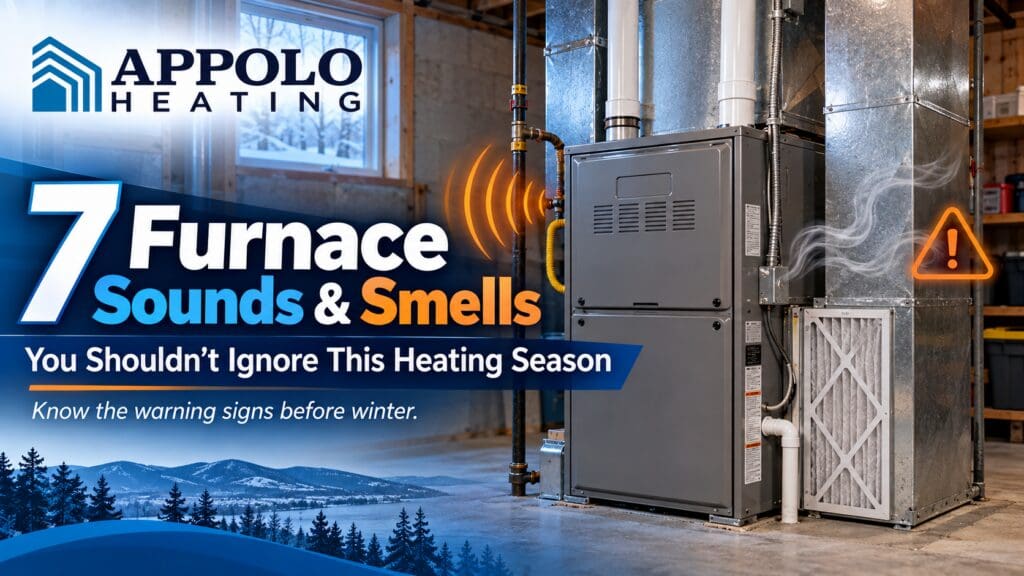
Your furnace probably isn’t completely silent.
You may hear a click when it starts, the rush of air through the registers and a low hum from the blower. Older ductwork can even make an occasional pop as the metal expands and contracts.
But you know your house.
When the furnace suddenly develops a new bang, squeal, rattle or smell, pay attention.
That’s especially important in Upstate New York, where your heating system can run day after day through the coldest part of winter. A small problem in October or November can become a no-heat call when temperatures really drop.
Appolo Heating repairs and maintains furnaces throughout the Capital Region, Hudson Valley and Southern Tier, and many furnace problems give homeowners some warning before the system stops working altogether. Appolo specifically identifies strange noises, ignition problems and short cycling as common reasons for furnace diagnostics. Appolo Heating
Here are seven furnace sounds and smells you shouldn’t ignore.
First: What Furnace Sounds and Smells Are Normal?
Before assuming every noise means trouble, there are a few things that can be normal.
A gas furnace will typically make some noise when the ignition sequence begins, followed by the blower starting and air moving through the ductwork. A low operational hum isn’t necessarily a problem.
You might also notice a brief dusty or slightly burnt smell the first time you turn the heat on in the fall. Dust can accumulate on furnace components during months of inactivity and then burn off when the equipment heats up. Carrier and Trane both note that this odor should be temporary, not something that continues getting stronger or returns every time the furnace runs. Carrier
The key word is brief.
If a sound is suddenly louder than normal, a smell persists, or something simply doesn’t seem right, your furnace is worth a closer look.
1. A Loud Bang or Boom When the Furnace Starts
A single pop somewhere in your ductwork isn’t necessarily cause for alarm. Sheet-metal ductwork expands as it heats and can make popping or pinging noises.
A loud bang or boom coming directly from the furnace when the burners ignite is different.
One possible cause is delayed ignition, where gas doesn’t ignite immediately and a small amount accumulates before lighting. Trane identifies a sudden bang at furnace startup as something that can indicate delayed gas ignition and requires professional attention. Trane
There can be other causes, too, which is why homeowners shouldn’t try to diagnose burner or gas-control problems themselves.
If the furnace has begun booming or banging during ignition, have it inspected.
Continuing to ignore a combustion problem because “the furnace still heats” isn’t a good winter strategy.
2. Squealing, Screeching or Grinding
These are the furnace sounds that tend to make people stop whatever they’re doing and listen.
And that’s usually the right reaction.
High-pitched squealing or screeching can be associated with blower-motor problems, bearings, moving components or—in some systems—airflow restrictions. Grinding can suggest that mechanical components are wearing or making contact in ways they shouldn’t.
Trane specifically points to the blower motor as a common source of high-pitched furnace noises, while Carrier identifies banging, grinding and squealing among warning signs that warrant professional furnace service. Trane
These problems don’t generally fix themselves.
In fact, continuing to operate a struggling motor or mechanical component can turn a smaller repair into a larger one.
If the furnace starts sounding like a power tool, don’t wait for it to stop running before calling.
3. A New Rattling, Buzzing or Loud Humming Sound
Some vibration and humming are normal when motors and blowers are operating.
What matters is change.
If the furnace used to run quietly and now buzzes loudly, vibrates or rattles through every heating cycle, something may have loosened or begun to wear.
Potential causes range from relatively straightforward issues such as loose panels or fasteners to problems involving the blower wheel, motor or electrical components. Loose ductwork can also create vibration or buzzing away from the furnace itself. Trane
This is a good example of why diagnosing HVAC problems by sound alone is difficult.
A $5 loose fastener and a failing motor can both make noise.
The important part is recognizing that a new or increasing furnace noise deserves attention before heating demand reaches its winter peak.
4. A Burning Plastic or Electrical Smell
A little dust burning off during the first heating cycle of the season can be normal.
The smell of melting plastic, overheating electronics or burning electrical insulation is not.
These odors can be associated with overheated wiring, blower motors, electrical connections or other components.
Carrier recommends shutting down a furnace when a burning-plastic or electrical odor appears to originate from the HVAC system and having it professionally inspected. Trane offers similar guidance for persistent electrical or plastic-burning odors. Carrier
If you see smoke, that’s an even clearer reason to stop operating the system and seek appropriate emergency help.
Don’t keep resetting the furnace or cycling it on to see whether the smell comes back.
Electrical problems can worsen quickly.
5. A Rotten-Egg or Sulfur Smell
This is the one to treat differently from everything else in this article.
Natural gas is naturally odorless, so utilities add an odorant that produces the recognizable rotten-egg or sulfur smell associated with a gas leak.
If you smell it:
Leave the home immediately.
Don’t use electrical switches, phones or anything else inside the building that could create a spark. Once everyone—including pets—is safely outside and away from the area, contact your gas utility or 911 as appropriate.
National Grid’s guidance is explicit: if you smell the rotten-egg odor, leave immediately and don’t switch anything on or off before getting clear of the building. National Grid
This is not the moment to call an HVAC company first and wait inside for a technician.
Get out. Contact the utility or emergency provider from a safe location. Once the gas situation has been secured, the furnace can be professionally evaluated if it’s determined to be involved.
6. A Metallic, Chemical or Unusual Pungent Smell
This one can be harder for homeowners to describe.
Some people call it metallic. Others describe a hot chemical smell or something similar to formaldehyde.
There are several possible causes, but unusual persistent odors from a fuel-burning furnace can warrant closer attention to the combustion system and heat exchanger.
Trane identifies strong metallic or formaldehyde-like odors, particularly when accompanied by other symptoms such as soot, banging, short cycling or a carbon-monoxide alarm, as possible warning signs of heat-exchanger trouble. A cracked heat exchanger can allow combustion gases to escape where they shouldn’t. Trane
That doesn’t mean a strange smell automatically means you have a cracked heat exchanger.
Smell alone cannot diagnose one.
A qualified technician needs to inspect the equipment.
Appolo’s seasonal heating maintenance includes combustion analysis, carbon-monoxide screening, safety-control testing and heat-exchanger inspection for exactly this reason. Appolo Heating
There’s also an important safety point here:
Carbon monoxide itself has no smell.
You cannot depend on your nose to detect CO.
Make sure your home’s carbon-monoxide alarms are installed and maintained according to manufacturer and local requirements. If an alarm activates, leave the home and contact emergency services or the appropriate emergency provider from a safe location.
7. A Persistent Burning, Smoky or Fuel-Oil Smell
If you have an oil furnace, don’t assume an ongoing fuel-oil odor is simply part of owning one.
A persistent oily, smoky or combustion-related smell can indicate problems involving the burner, fuel delivery, combustion or venting. Carrier notes that strong or continuing oil odors from an oil furnace require attention rather than simply being accepted as normal operation. Carrier
The same principle applies to a persistent “burning dust” smell from any furnace.
If you turned the furnace on for the first time this fall and the dusty odor disappeared quickly, that’s one thing.
If you’re still smelling something burning hours later—or the smell keeps returning every time the furnace runs—it’s time to investigate.
Regional Albany HVAC guidance reaches the same conclusion: a brief startup odor can occur, while persistent burning or unusual furnace odors should be professionally evaluated. Family Danz
Furnace Warning Signs: What Should You Do?
A useful way to think about furnace sounds and smells is by urgency.
| What you notice | What to do |
|---|---|
| Brief dusty smell on first fall startup | Monitor it; it should disappear quickly |
| New rattling or buzzing | Schedule furnace inspection |
| Squealing, screeching or grinding | Schedule service promptly |
| Loud bang at ignition | Shut the system down and have it inspected |
| Burning plastic/electrical smell | Turn the furnace off and call for service |
| Persistent fuel or smoky odor | Stop operation and arrange professional inspection |
| Rotten egg/sulfur gas smell | Leave immediately and contact the gas utility/911 from outside |
| Carbon-monoxide alarm | Leave immediately and contact emergency services |
Don’t Wait Until a Strange Noise Becomes a No-Heat Call
One of the most common mistakes homeowners make is waiting because the furnace is technically still producing heat.
The blower is squealing—but the house is warm.
There’s a new rattling sound—but the furnace starts.
There’s a strange smell—but it eventually disappears.
The problem is that heating equipment works hardest precisely when you can least afford a breakdown.
Once Upstate New York settles into sustained freezing temperatures, an issue that seemed minor during a mild October afternoon can leave you without heat in January.
Preventive maintenance gives a technician the opportunity to look for developing electrical, airflow, combustion and mechanical problems before they become emergencies.
Appolo’s seasonal HVAC maintenance includes a multi-point inspection of safety controls, filters, blower components, airflow, electrical connections, motor voltage and amperage, thermostat operation and heating-system combustion performance. Appolo Heating
Schedule an HVAC tune-up with Appolo Heating before that strange sound gets louder.
When Is a Furnace Noise a Repair Issue vs. a Replacement Issue?
A strange noise doesn’t automatically mean you need a new furnace.
Many furnace problems are repairable.
The bigger picture matters: equipment age, repair history, overall condition, cost of the current repair and whether the system is still heating your home reliably.
If your furnace is getting older and strange noises or odors are becoming part of a larger pattern of frequent repairs, inconsistent temperatures or declining performance, it may be worth discussing replacement rather than continuing to address one component at a time.
Appolo provides furnace repair, maintenance and replacement throughout New York and services all major types of residential heating equipment. Appolo Heating
You can explore Appolo’s full range of heating repair, maintenance and replacement services to learn more.
Listen to Your Furnace Before Winter Gets Louder
Your furnace doesn’t need to be silent.
But it also shouldn’t suddenly sound—or smell—different than it did last week.
New banging, grinding, squealing, electrical odors or persistent combustion smells are your cue to have the system inspected rather than hoping the problem goes away.
For homeowners throughout the Capital Region, Hudson Valley and Southern Tier, Appolo Heating has provided heating service since 1968, with local offices serving each region and 24/7 emergency response available when heating problems can’t wait. Appolo Heating
If your furnace is trying to tell you something, listen before you’re left in the cold.
Schedule your furnace tune-up with Appolo Heating or explore our heating services if your system already needs repair.
Frequently Asked Questions About Furnace Sounds and Smells
Why does my furnace smell like it’s burning when I first turn it on?
Dust can accumulate on furnace components while the system sits unused during warmer months. When you first turn the heat on, that dust may produce a temporary burning smell. It should dissipate relatively quickly. If the smell continues, becomes stronger or smells electrical or like melting plastic, turn off the furnace and have it inspected. Carrier
Why is my furnace making a banging noise?
Banging can have several causes. Ductwork can pop as it expands and contracts, while a loud bang directly at the furnace during ignition can indicate a more serious burner or delayed-ignition problem. If the noise appears to originate at the furnace, schedule professional service. Trane
Why is my furnace squealing?
High-pitched squealing or screeching can be associated with blower-motor components, bearings or airflow restrictions. Because several different problems can produce a similar noise, a professional inspection is the safest way to identify the cause. Trane
Is a humming furnace normal?
A low, steady operational hum can be normal. A new, unusually loud buzzing or humming sound can indicate vibration, motor wear or an electrical issue and should be checked if it persists. Trane
What should I do if my furnace smells like rotten eggs?
Leave the building immediately with everyone in the home, including pets. Do not operate electrical switches or phones inside. Once you’re safely away, call your natural-gas utility or 911 as appropriate. A rotten-egg or sulfur odor can indicate a gas leak. National Grid
Can you smell carbon monoxide from a furnace?
No. Carbon monoxide is odorless and cannot be reliably detected by smell. Homes with fuel-burning heating equipment should have working carbon-monoxide alarms. If an alarm sounds, leave the building and contact the appropriate emergency provider.
Can a cracked heat exchanger make a furnace smell?
Possible warning signs of heat-exchanger trouble can include unusual metallic or chemical odors, soot, banging, short cycling or repeated carbon-monoxide alarms, but these symptoms aren’t enough to diagnose a crack on their own. A professional inspection is required. Trane
Why does my oil furnace smell like fuel?
A persistent oil smell can be associated with fuel leakage, burner problems or incomplete combustion and should be professionally evaluated. Strong or ongoing fuel odors shouldn’t simply be considered normal oil-furnace operation. Carrier
Should I turn off my furnace if I smell something burning?
If the smell is clearly electrical, melting-plastic, smoky or persistent, shut the furnace down and arrange professional service. A brief dusty smell at the first startup of the season can be normal, but it should fade quickly. Carrier
Can a furnace tune-up prevent strange noises and smells?
Maintenance can’t guarantee that a component will never fail, but professional inspection gives a technician an opportunity to identify loose components, airflow problems, electrical issues, combustion concerns and wear before they develop into larger problems. Appolo’s seasonal tune-ups include inspections and testing across these areas. Appolo Heating
Hearing or smelling something new from your furnace? Don’t wait until it becomes a no-heat call.